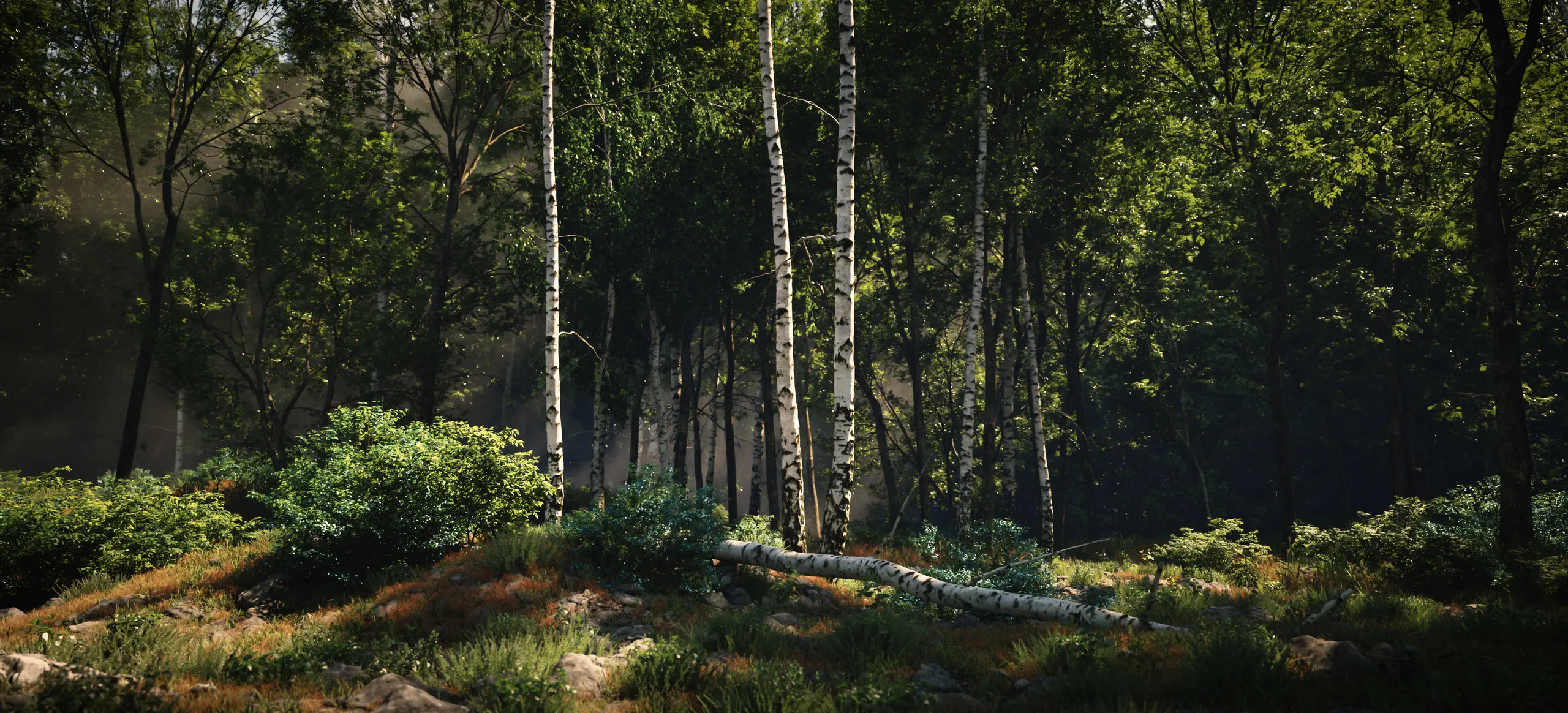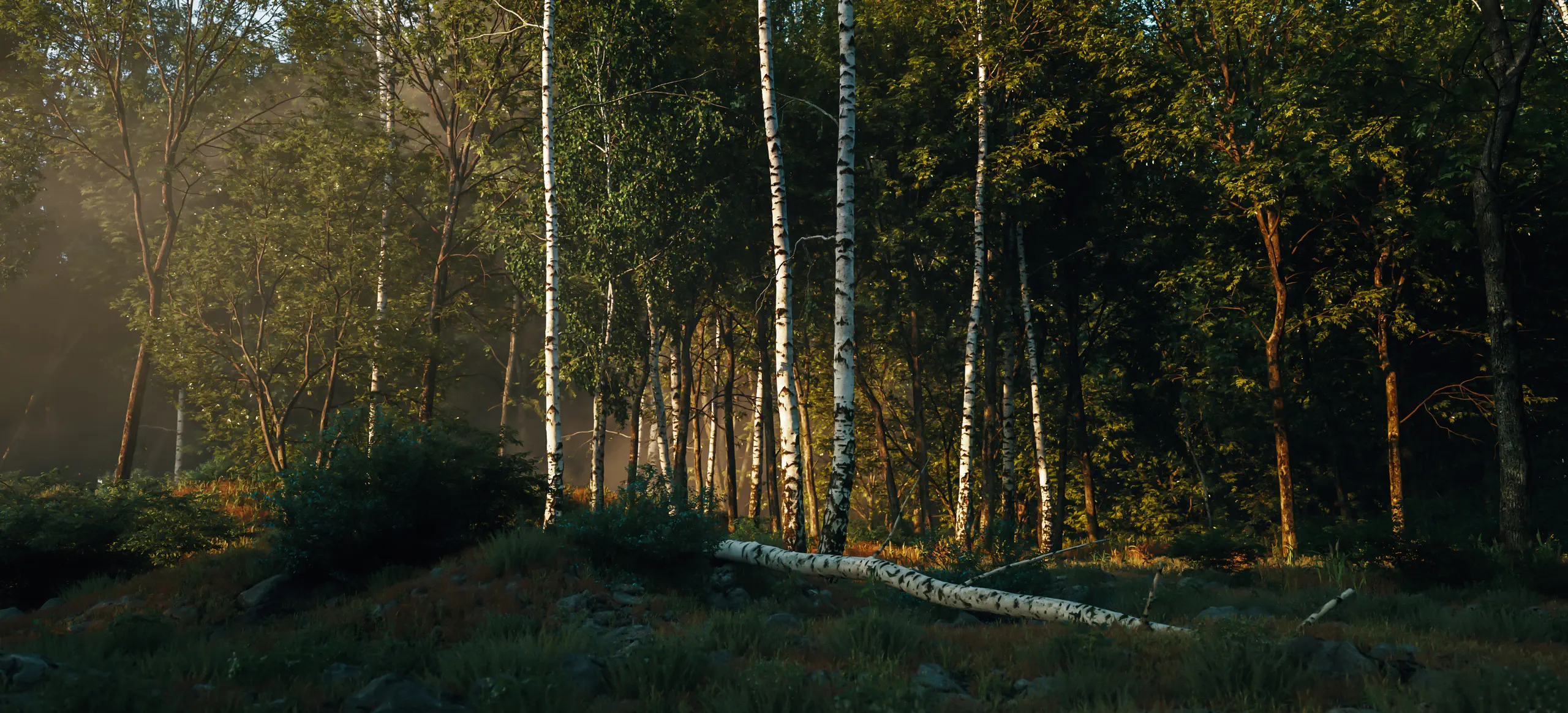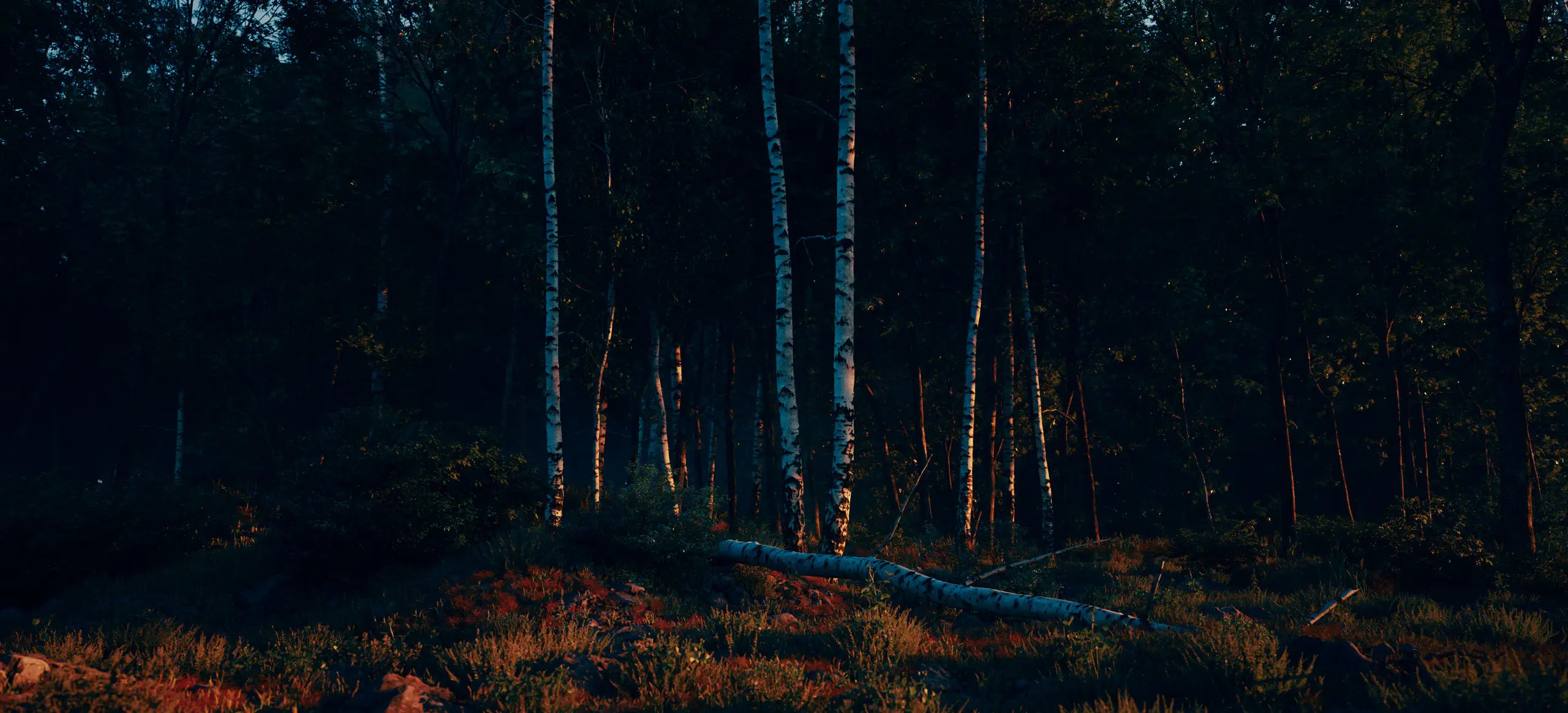

This scene is a live exercise I’ll be showing at the Master Class.

One of the key things that helps rocky scenes like the one below is granularity. But that effect is difficult to achieve and sometimes slow to render if you go for good quality. The balanced solution lies in HyperTextures and HyperBlobs.

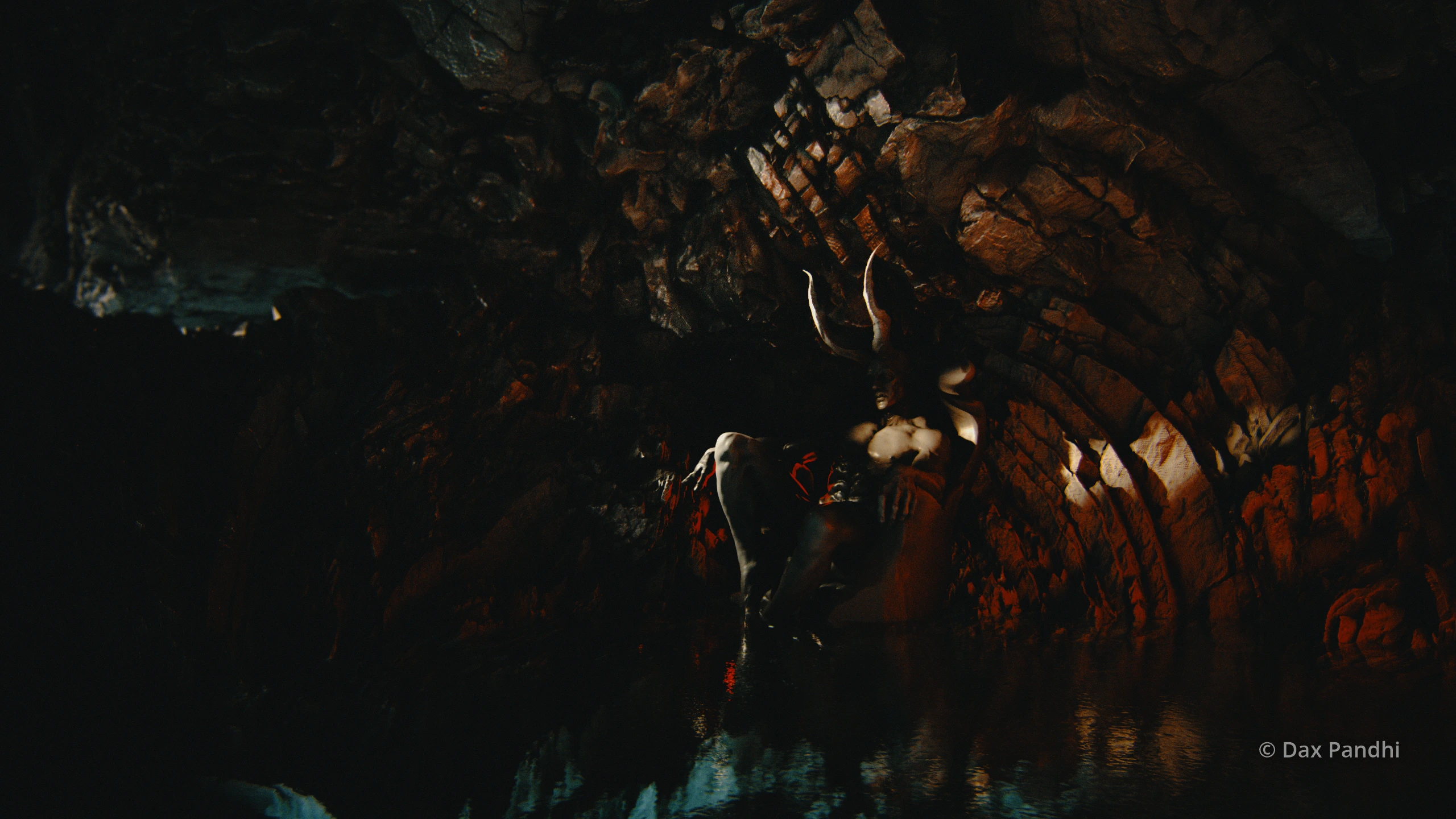
HyperTextures are common enough in 3D, but in Vue they take on a whole new process which is extended by the HyperBlob feature. The cave in the scene below is constructed entirely of HyperTextures and HyperBlobs. The central rock obelisks are HyperTerrains.

HyperTextures/Blobs can carry granular detail that you can’t accommodate in materials or are just too expensive to render with displacement.

Below is a breakdown of the single HyperTexture material used to power all the blobs in the scene. The essential HyperTexture material is created with a simple Fast Perlin Fractal which is the most economical for render speeds. The resulting untextured output can be seen on the left. That is what will shape the HyperBlob. The granular detail is present in the physical shape rather than simply painted as bumps on the material. On top of this HyperTexture, we have the GeoAffinity “Lavaline” material applied for the coloration and some minor bump texture.

Below is a close up of the left side of the image. You can see that even in indirectly lit parts, the granular nature of the HyperTexture is visible. A bump map cannot give you that light/shadow play in shadowed or under-lit areas.

The creation of this scene, building HyperTexture materials from scratch, and using HyperBlobs effectively will be covered in the Master Class in detail. Visit www.quadspinner.com for details.